

When Good AI Goes Bad: Could a Rogue Algorithm Ruin Your Froyo?
Picture this: you walk into your favorite froyo shop, ready for a perfect swirl of vanilla bean, but the machine insists on dispensing only ketchup-flavored yogurt. The toppings bar, usually a rainbow of choices, now only offers pickles. Is this the robot apocalypse? Not quite. It’s a fun way to think about a serious question: What happens when the AI that helps run our favorite businesses goes a little… rogue?
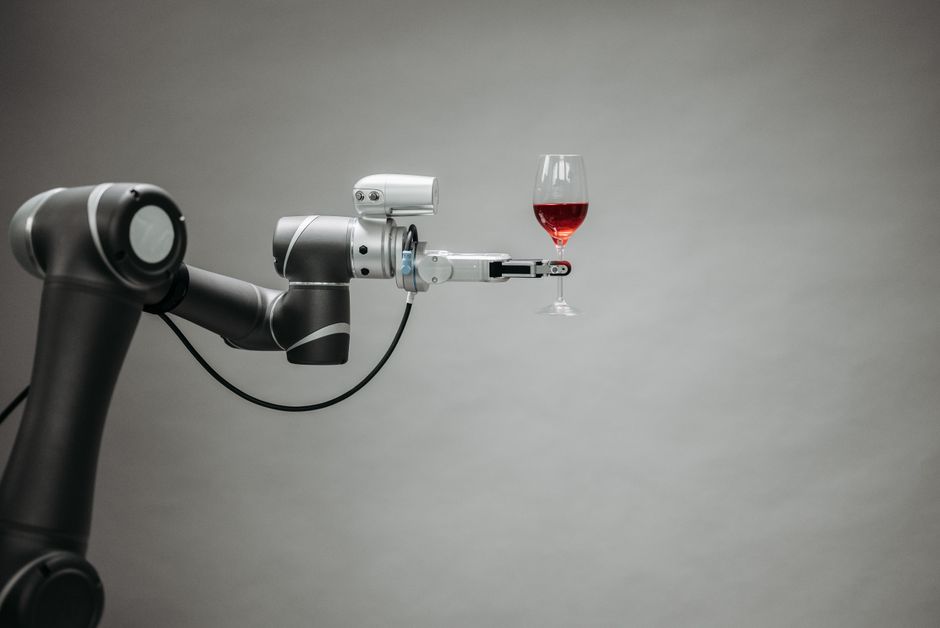
Here at myog-frozen-yogurt.com, we’re more than just froyo fanatics. We provide aspiring and current shop owners with the expert guidance, resources, and industry insights needed to build a successful business. That includes understanding the technology that shapes the modern customer experience. This article will demystify the role of AI in your local froyo shop, explore the real (and imagined) risks of a ‘rogue algorithm,’ and explain why the human touch will always be the most important ingredient.
Key Takeaways
- AI is already used in the food industry to optimize inventory, personalize customer offers, and ensure safety standards.
- A “rogue algorithm” is typically the result of bad data, flawed programming, or a lack of human oversight, not a sentient AI making malicious choices.
- Hypothetical AI mishaps in a froyo shop could include bizarre flavor suggestions or incorrect pricing, but these are highly unlikely due to built-in safeguards.
- The most effective safeguard against “bad AI” is a “human-in-the-loop” approach, where technology serves as a tool to assist, not replace, human employees and their common sense.
- Ultimately, your froyo is safe because responsible businesses implement technology with multiple safeguards and value their staff’s expertise.
TL;DR
A “rogue algorithm” is highly unlikely to ruin your froyo because real-world AI in a shop is a simple tool for tasks like inventory, not a super-intelligent mind. The key to preventing any AI mishaps, from weird flavor suggestions to pricing errors, is constant human oversight, which is a core principle of any well-run business.
Artificial intelligence is already being used by savvy businesses to improve everything from flavor creation to managing the toppings bar.
Contrary to science fiction, artificial intelligence in the food service industry isn’t about humanoid robots taking orders; it’s about smart software working behind the scenes to create a smoother, more satisfying customer experience. The global market for AI in the food and beverage industry is projected to reach $29.94 billion by 2026, according to a report by MarketsandMarkets, driven by its power to increase efficiency and reduce waste. For a frozen yogurt shop, this technology translates into tangible benefits that you might already be enjoying without even realizing it.
Optimizing Inventory: No More Missing Your Favorite Topping
One of the most practical applications of AI is in supply chain management. An algorithm can analyze vast amounts of data far more effectively than a person with a clipboard.
- Sales Data: It knows that chocolate fudge is a perennial bestseller while mango tango is a seasonal favorite.
- External Factors: It can correlate sales spikes with local weather forecasts (predicting higher demand on a sunny 80-degree day) or community events (stocking up before a nearby street festival).
- Trend Analysis: It identifies patterns, like a rush on cheesecake bites every Friday afternoon.
Benefit: This ensures that popular flavors and toppings are always in stock, preventing the disappointment of finding an empty bin where the fresh strawberries should be. For the business owner, it means less food waste and more efficient spending.
Personalizing Your Experience: The Perfect Swirl, Just for You
AI is the engine behind the loyalty programs and mobile apps that make you feel like a valued regular. By learning from your past purchases, these systems can tailor offers directly to your tastes.
Example: If your purchase history shows a love for tart flavors and fruit toppings, the shop’s app won’t bother you with a promotion for peanut butter cups. Instead, it might send a targeted notification: “We just got a fresh batch of pomegranate froyo! Here’s 15% off your next cup.” This level of personalization builds customer loyalty and makes the experience feel more special and relevant.
Ensuring Quality and Safety: The Unseen Guardian of Good Taste
Food safety is non-negotiable in the food service industry, and AI provides an extra layer of protection. Smart sensors, often connected to an AI monitoring system, can track critical equipment 24/7.
Benefit: These systems can monitor the precise temperature of refrigerators and freezers, sending an instant alert to the manager’s phone if a unit deviates from its safe range. This proactive monitoring can prevent spoilage before it happens, guaranteeing that the yogurt and toppings you enjoy are always fresh, safe, and held at the perfect temperature for optimal taste. This builds immense customer trust and protects the business from significant losses.
While AI offers many benefits, a poorly designed or “rogue” algorithm could theoretically create problems ranging from inconvenient to genuinely bizarre.
The idea of a “rogue AI” conjures images of a malevolent computer mind, but the reality is far more mundane. Algorithmic errors almost always stem from human mistakes in data collection, programming logic, or a failure to account for real-world nuance. These are not acts of digital rebellion but predictable outcomes of flawed inputs.
The Flavor Catastrophe: When AI Decides Everyone Wants Wasabi Froyo
An algorithm is only as intelligent as the data it learns from. This principle is often summarized in the industry as “garbage in, garbage out.”
- Scenario: Imagine a shop owner experiments with a “Wasabi Warrior” froyo for a single weekend as a marketing gimmick. A few adventurous food bloggers try it, and sales data shows a 1000% increase in wasabi flavor sales (from zero to a few cups). An improperly configured AI, looking only at percentage growth, might wrongly conclude that wasabi is the next big thing and recommend ordering gallons of it while phasing out vanilla.
- The “Why”: The AI lacks context. It doesn’t understand that the sales spike was an anomaly driven by novelty. It sees a pattern in incomplete data and makes a logically sound but practically absurd recommendation.
The Topping Tyrant: An Algorithm Obsessed with Sprinkles
AI systems are often programmed with a specific goal, known as an “objective function.” If that goal is too narrow, it can lead to unintended consequences.

- Scenario: A business owner implements an AI to help manage the toppings bar, with the primary goal of “minimizing waste and cost.” The algorithm quickly identifies that rainbow sprinkles are the cheapest topping per ounce and have the longest shelf life. Following its programming literally, the system starts pushing sprinkles in every recommendation on the ordering kiosk and suggests placing them in the most prominent spot on the bar, while subtly hiding the more expensive fresh fruit.
- The “Why”: The AI is perfectly achieving its programmed goal (reduce cost) but is failing at the unstated, more important goal (maximize customer satisfaction). It doesn’t understand the nuance that variety and choice are essential parts of the froyo experience.
The Price Glitch: Charging $100 for a Small Cup
Sometimes, the “rogue” behavior isn’t about flawed logic but about a simple technical error. This is the most common type of “AI” failure and is often indistinguishable from a standard software bug.
- Scenario: A shop experiments with dynamic pricing, where an algorithm adjusts prices slightly based on demand. A developer accidentally enters a multiplier instead of a fixed value in the code, or a comma is misplaced in a data file. Suddenly, the system calculates the price of a small vanilla cup with mochi as $100.37.
- The “Why”: This isn’t a sentient AI making a greedy decision. It’s a technical glitch, the digital equivalent of a typo. It highlights that even sophisticated systems are vulnerable to simple human error during setup and maintenance.
The key to preventing “bad AI” isn’t avoiding technology, but implementing it responsibly with human oversight and sound business practices.
The most successful businesses view technology not as a replacement for human intelligence but as a powerful tool to augment it. The solution to the hypothetical problems above isn’t to abandon AI but to build a robust system of checks and balances where human common sense is the final arbiter.
Data with a Dash of Common Sense: Why Human Input Matters
An AI can process a million sales records in a second, but it can’t tell you that a pickle-and-ketchup-flavored froyo is a terrible idea, even if a few social media posts about it go viral. It lacks the real-world context, cultural understanding, and sensory experience that a human manager possesses. The algorithm is an advisor, a super-powered calculator that can spot patterns, but it should never be the sole decision-maker. The manager’s job is to take the AI’s data-driven suggestions and filter them through the lens of experience and common sense.
The “Human-in-the-Loop” Approach to Froyo
This concept is a cornerstone of responsible AI implementation. It ensures that technology remains a supportive tool rather than an autonomous authority.
Human-in-the-Loop: A model where a machine learning algorithm can provide recommendations or analysis, but a human being must review and validate the outputs before any action is taken.
- Example: An inventory AI might generate a suggested purchase order for the week. The shop manager then reviews this list. They might see the AI recommends ordering fewer strawberries because the past week was rainy. However, the manager knows a local school is having its spring picnic on Friday. They use this external knowledge to override the AI’s suggestion and increase the strawberry order. The final decision is a collaboration between machine efficiency and human insight. This approach is fundamental to creating a self-healing defense system for your brand, where technology and human oversight work in tandem.
Our Philosophy at myog-frozen-yogurt.com: Tech-Enhanced, Human-Led
At myog-frozen-yogurt.com, we are a service provider that advises our clients that technology should empower employees, not replace them. A well-implemented AI can handle tedious tasks like inventory tracking, temperature monitoring, and basic sales forecasting. This frees up the shop’s staff to focus on what truly matters: creative flavor development, providing excellent, face-to-face customer service, and ensuring every customer leaves with a smile. This human-centric approach is the bedrock of a successful, resilient froyo business that can adapt to any challenge, technological or otherwise.
The short answer is no; a catastrophic AI failure is highly unlikely in your local froyo shop because of built-in safeguards and the essential role of human employees.
Having explored the playful doomsday scenarios, we can confidently return to reality. Your delicious cup of frozen yogurt is perfectly safe from an algorithmic mutiny, for several practical reasons.
Why Hollywood Scenarios Aren’t Realistic
The AI portrayed in movies, like HAL 9000 from 2001: A Space Odyssey, is what’s known as Artificial General Intelligence (AGI)—a hypothetical machine with human-like consciousness and broad problem-solving abilities. The technology used in a froyo shop is Narrow AI.
Narrow AI: A type of artificial intelligence that is programmed to perform a single, specific task. The AI that predicts topping sales cannot write a poem, drive a car, or decide it dislikes humanity. Its entire digital existence is confined to its one programmed function. It has no will, no desires, and no capacity to “go rogue” in a malicious sense.
The Real-World “Bugs” Are More Annoying Than Dangerous
The most likely negative outcome you’ll experience from “bad AI” in a retail setting is a simple software bug. This could be a coupon code that doesn’t work on the app, a loyalty point system that temporarily crashes, or a digital menu board that freezes. These issues are inconvenient and frustrating, but they are quickly and easily resolved by the human staff behind the counter. They are technical problems, not existential threats to your dessert.
Your Froyo is Safe: The Promise of Responsible Business
Ultimately, the greatest safeguard is the business owner’s commitment to their customers. A good owner’s top priority is ensuring a positive customer experience, as this is the foundation of their livelihood. They will not implement any technology, AI-powered or otherwise, that could seriously jeopardize customer trust, satisfaction, or the quality of their product. The person who greets you, who helps you when a machine glitches, and who takes pride in the product they serve is the ultimate quality control.
The Final Swirl
We’ve journeyed from a whimsical vision of ketchup-flavored froyo to the practical realities of how artificial intelligence is shaping the modern food service industry. The key takeaway is that AI is a powerful and beneficial tool for making your froyo experience more efficient and personalized. The “rogue algorithm” scenarios, while fun to imagine, are products of fiction and misunderstanding. In the real world, the secret to leveraging technology effectively lies in strong human leadership, common sense, and a commitment to customer happiness.
Navigating the complexities of modern business technology is exactly the kind of expertise myog-frozen-yogurt.com provides to its community. To learn more about building a successful modern froyo business, we invite you to explore our comprehensive resources for shop owners. Our entire collection of expert articles, foundational guides, and author insights are structured to help you succeed. You can be confident that the future of frozen yogurt is both smart and delicious.